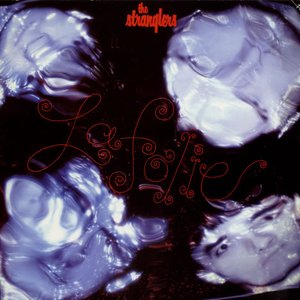
The Stranglers
The Stranglers are an English rock band formed in Guildford, Surrey, in 1974. The group's classic line-up, active from 1975 to 1990, consisted of guitarist and vocalist Hugh Cornwell, bassist and vocalist Jean-Jacques Burnel, keyboardist Dave Greenfield, and drummer Jet Black. The band have had 23 UK top 40 singles and 20 UK top 40 albums during a career spanning more than five decades, and are among the longest-surviving bands to have emerged from the British punk scene. Read more on Last.fm
The Stranglers are an English rock band formed in Guildford, Surrey, in 1974. The group's classic line-up, active from 1975 to 1990, consisted of guitarist and vocalist Hugh Cornwell, bassist and vocalist Jean-Jacques Burnel, keyboardist Dave Greenfield, and drummer Jet Black. The band have had 23 UK top 40 singles and 20 UK top 40 albums during a career spanning more than five decades, and are among the longest-surviving bands to have emerged from the British punk scene. Formed as the Guildford Stranglers in early 1974, the group initially developed a following within the mid-1970s pub rock scene. Their aggressive style and confrontational image led the media to associate them with the emerging punk rock movement, although their music incorporated elements of several genres, including new wave, art rock, gothic rock and sophisti-pop. They achieved major mainstream success with the 1982 single "Golden Brown". Other successful singles include "Peaches", "No More Heroes", "Strange Little Girl", "Skin Deep" and "Always the Sun". The Stranglers' early sound was characterised by Burnel's prominent bass playing and Greenfield's keyboard work. Their music also featured the vocals and lyrics of Cornwell and Burnel. Over subsequent years, their musical style became more varied and incorporated a wider range of arrangements and influences. Prior to forming the band, Jet Black, whose real name was Brian Duffy, operated several businesses, including a fleet of ice cream vans, and later ran The Jackpot, a Guildford off-licence that became associated with the early Stranglers. Black had previously worked as a semi-professional drummer during the late 1950s and early 1960s. In 1974, after establishing financial stability through his businesses, he decided to return to music and form a band. His ice cream vans were subsequently used to transport the group during its early touring years. The group that developed between 1974 and 1975 was initially known as the Guildford Stranglers. The geographical prefix was subsequently dropped, and the name The Stranglers was registered as a business by Black on 11 September 1974. The other original members were bassist and vocalist Jean-Jacques Burnel, guitarist and vocalist Hugh Cornwell, and keyboardist and guitarist Hans Wärmling. Wärmling left within a year and was replaced by keyboardist Dave Greenfield. The members had musical backgrounds in different genres. Cornwell had previously played blues and had briefly been a bandmate of Richard Thompson. Burnel had studied classical guitar and had performed with symphony orchestras. Black's background was in jazz drumming, while Greenfield had performed at military bases in Germany. Early influences on the group included psychedelic rock bands such as the Doors and the Music Machine. From 1976, the Stranglers became associated with the emerging British punk rock movement, partly as a result of supporting the Ramones and Patti Smith during their first British tours. Some figures in the British music press questioned the band's association with punk because of the members' age, musical backgrounds and the intellectual elements of some of their lyrics. Burnel subsequently described the group as being part of the punk movement while also developing its own musical characteristics. The band's first three albums, "Rattus Norvegicus", "No More Heroes" and "Black and White", were released within a period of 13 months. All three achieved commercial success, while singles including "Peaches", "Something Better Change" and "No More Heroes" became associated with the British punk scene. The band also attracted criticism from some commentators over elements of their lyrics and public image. Other critics interpreted these aspects as satire and irony. The group's relationship with the music press was often confrontational. In 1977, Burnel assaulted music journalist Jon Savage during a promotional event. In February 1978, the Stranglers played three unannounced pub performances as a gesture of thanks to venues and landlords that had supported the band during its early career. The first took place at The Duke of Lancaster in New Barnet on Valentine's Day, followed by performances at The Red Cow in Hammersmith and The Nashville Rooms in West Kensington. On 11 October 1978, the Stranglers appeared at the University of Surrey for the BBC television programme "Rock Goes to College". The group left the stage during the performance after an agreement to make tickets available to non-university students had not been honoured. The performance was broadcast on 19 October. During the latter half of the 1970s, the Stranglers toured Japan twice and became associated with the country's alternative music scene. They performed at venues including S-KEN Studio in Roppongi and The Loft in Shinjuku and Shimokitazawa. The scene included groups such as Friction, and the Stranglers became acquainted with Red Lizard, whom they later invited to London. The group subsequently became known as Lizard. In 1979, Burnel became acquainted with Keith, co-founder and drummer of the Japanese rock band ARB. In 1983, after ARB's bassist was imprisoned, Burnel travelled to Japan and joined the band for its forthcoming tour. He performed with ARB for five weeks, including an appearance at the All Japan Rock Festival at Hibiya Park. He became the first non-Japanese performer to appear at the festival. Burnel also played on the ARB tracks "Yellow Blood" and "Fight it Out", both of which appeared on the album "Yellow Blood". In 1979, one of the Stranglers' two managers advised the group to consider disbanding, believing that they had lost direction. The band rejected the proposal and subsequently ended its relationship with its management team. Burnel released the experimental solo album "Euroman Cometh", accompanied by a short UK tour, while Cornwell recorded the album "Nosferatu" with Robert Williams. Later in 1979, the Stranglers released "The Raven", which incorporated a more melodic and complex musical style. Its songs addressed subjects including Viking voyages, heroin addiction, genetic engineering, contemporary political events in Iran and Australia, and extraterrestrial visitors. The album replaced the Hohner Cembalet used prominently on the band's previous three albums with Oberheim synthesizers and also made greater use of acoustic piano. Martin Rushent, who had produced several of the group's earlier albums, left during the recording after disagreements over the production of "Meninblack". The Stranglers subsequently co-produced the album with Alan Winstanley. "The Raven" reached number 4 on the UK Albums Chart. It produced the top 20 single "Duchess", while "Nuclear Device" reached number 36 and the EP "Don't Bring Harry" reached number 41. A non-album single, "Bear Cage", was released with "Shah Shah a Go Go" from "The Raven" as its B-side. A 12-inch single containing extended versions of both tracks was also issued, with "Bear Cage" reaching number 36. The Stranglers subsequently recorded "The Gospel According to the Meninblack", a concept album dealing with religion and its relationship with extraterrestrial phenomena. It was preceded by the non-album single "Who Wants the World", which reached the UK top 40. The album also included "Waltzinblack", which was later used as the theme music for television chef Keith Floyd. "The Gospel According to the Meninblack" differed substantially from the band's earlier releases and reached number 8 on the UK Albums Chart. The track "Two Sunspots" had been recorded during the sessions for "Black and White" in 1978 but was not released at the time. It was later included on "The Gospel According to the Meninblack". The "Meninblack" track on "The Raven" was created using a slowed-down version of the recording that became "Two Sunspots". " La Folie", released in 1981, was another concept album, this time dealing with the subject of love. It initially charted lower than the band's previous studio albums, and its first single, "Let Me Introduce You to the Family", reached number 42. The second single, "Golden Brown", became the group's highest-charting single, reaching number 2 on the UK Singles Chart. Cornwell later stated that the lyrics referred both to heroin and to a woman of Mediterranean origin. The album "La Folie" subsequently re-entered the UK Albums Chart and reached number 11. The single "La Folie", sung in French, received limited radio play and reached number 47. The Stranglers subsequently left EMI. As part of their severance agreement, they released the compilation album "The Collection 1977–1982". The compilation included "Strange Little Girl", which had originally been recorded as a demo in 1974 and rejected by EMI. The single reached number 7 in July 1982 and provided royalties to Wärmling through his co-writing credit. Following the band's renewed commercial success, several record companies sought to sign the Stranglers. Epic Records ultimately secured their contract. The group retained substantial artistic control and released "Feline" in 1983. The album included "European Female", which reached number 9 in the UK Singles Chart. "Feline" represented another change in musical direction, incorporating European musical influences and becoming the first Stranglers album to feature acoustic guitars. Black also began using electronic drum kits during the album's production. The album reached number 4 on the UK Albums Chart in January 1983. "Aural Sculpture" was released in 1984 and included the single "Skin Deep", which reached number 15 in the UK and also charted in Australia, New Zealand and the Netherlands. The album was the first Stranglers release to feature a three-piece horn section, which subsequently appeared on their albums and live performances until Cornwell's departure in 1990. "Aural Sculpture" reached number 14 on the UK Albums Chart in November 1984. The Stranglers released "Dreamtime" in 1986. The album addressed environmental issues among other subjects and included "Always the Sun", which reached number 30 in the UK and also charted in France, Ireland, Australia and the Netherlands. "Dreamtime" was the only Stranglers album to chart in the United States and reached number 16 on the UK Albums Chart in November 1986. The Stranglers' final album with Cornwell, "10", was released in 1990. The album followed the band's 1988 cover of The Kinks' "All Day and All of the Night", which reached number 7 in the UK. The first single from "10" was a cover of the 1960s song "96 Tears", which reached number 17 in the UK. The follow-up single, "Sweet Smell of Success", reached number 65. "Man of the Earth" was intended as a third single but was not released. In August 1990, Cornwell left the Stranglers to pursue a solo career after the band failed to secure a planned tour of the United States. In his autobiography, Cornwell described disagreements within the band and stated that he believed the group had reached a creative impasse. His departure ended the original four-member line-up. Following Cornwell's departure, CBS-Sony dropped the Stranglers from its roster. The remaining members recruited guitarist John Ellis, who had previously opened for the band as a member of the Vibrators, substituted for Cornwell during his imprisonment for drug possession in 1980, and worked with Burnel and Greenfield in the side project Purple Helmets. Ellis had also joined the Stranglers as a touring guitarist shortly before Cornwell's departure. Burnel and Ellis initially shared vocal duties, including during an appearance on the television programme "The Word". Paul Roberts subsequently joined as lead vocalist and performed most of the band's live material, including songs originally sung by Burnel. This line-up recorded the albums "Stranglers in the Night" in 1992, "About Time" in 1995, "Written in Red" in 1997 and "Coup de Grace" in 1998. In 2000, Ellis left the band and guitarist Baz Warne joined. The Stranglers' album "Norfolk Coast" was released in 2004. The album was followed by a tour and produced the single "Big Thing Coming", which reached number 31 on the UK Singles Chart and became their first UK top 40 single in 14 years. The album also included "Tuckers Grave", a song concerning a Somerset cider house named after a person who died by suicide on a nearby farm. In 2005, the live album "Coast to Coast: Live on Tour" was released, containing recordings from the previous year's tour. Goldblade supported the Stranglers on their UK tour. Roberts left the band in May 2006, leaving Burnel, Black, Greenfield and Warne as a four-piece. Lead vocals were divided between Burnel and Warne, with Burnel performing songs he had originally sung and Warne performing songs originally led by Cornwell. The album "Suite XVI" was released in September 2006. Its title is a play on the phrase "Sweet 16" and refers to the album being the band's sixteenth studio release. The album incorporated elements of the group's earlier punk-influenced sound alongside other musical styles and included the song "I Hate You", which incorporated elements associated with country music and was influenced by Johnny Cash. In 2007, Black began missing performances because of atrial fibrillation. On some occasions, his drum technician Ian Barnard performed in his place. On 4 November 2007, the Stranglers, with Black present, performed a sold-out concert at the Roundhouse in Camden, London, commemorating the 30th anniversary of their 1977 appearances at the venue. The set largely followed the set list from the 1977 concert, with additional later material performed as an encore. The performance was released on DVD as "Rattus at the Roundhouse". The Stranglers began 2010 with an extensive UK tour, including a sold-out performance at the Hammersmith Apollo in March, their first appearance at the venue since 1987. Max Raptor supported the band on the 16-date UK tour. The compilation album "Decades Apart" was released in February 2010 as a double CD. It contained songs from throughout the band's career, including at least one track from each of its 16 studio albums, as well as two new tracks, "Retro Rockets" and "I Don't See the World Like You Do". The download edition also included "Wasting Time", an unreleased recording from 1978 inspired by the band's appearance on "Rock Goes to College". The song had originally been titled "Social Secs". Its music was later reversed and released as "Yellowcake UF6", the B-side of "Nuclear Device" in 1979. During the summer of 2010, the band performed at festivals including Weyfest, Glastonbury and T in the Park in the UK, Oxegen in Ireland, and concerts in Japan, Greece, Poland, Slovakia and Bulgaria. A live album and DVD recorded at the Hammersmith Apollo in May 2010 were also released. In March 2011, the Stranglers completed another UK tour, with Wilko Johnson's band supporting them. The group then toured Europe during the remainder of the year. On 23 September 2012, the Stranglers returned to Looe, Cornwall, with Warne and Burnel providing lead vocals. The band had previously spent time in Looe while writing "Suite XVI". The album "Giants" was released in 2012. Its deluxe edition included a second disc containing recordings from an acoustic session held in November 2011. In 2013, the Stranglers undertook a UK tour, with Black generally performing during the second half of concerts while Jim Macaulay performed during the first half. The band also appeared at several festivals, including a BBC Proms session on 12 August. Black did not participate in the North American tour, during which Macaulay performed the complete concerts. In 2014, the Stranglers marked their 40th anniversary with the Ruby Tour in the UK and Europe. In 2015, the March On tour comprised 18 UK dates. At venues with sufficient stage space, a second drum kit was installed and Black performed four songs. A planned concert in Moscow was cancelled because of visa difficulties, followed by a short UK tour in July and further European performances later that year. In April 2016, the group returned to New Zealand and Australia, and in November 2016 they performed in Tel Aviv, Israel. Black ceased regular stage performances after several partial-set appearances in March 2015, although he remained an official member until his retirement in 2018. Macaulay appeared alongside Burnel, Greenfield and Warne in promotional material from 2016 onwards and subsequently became an official member of the band. In August 2017, the Stranglers performed an outdoor concert in Hull as part of the UK's City of Culture celebrations. In July 2018, they performed at the LUNAR Festival in Tanworth-in-Arden. Greenfield died on 3 May 2020 at the age of 71. He had contracted COVID-19 while receiving hospital treatment for a heart condition. The Stranglers' 18th studio album, "Dark Matters", included recordings featuring Greenfield and was the band's first album following Black's retirement. It was released on 10 September 2021 and reached number 4 on the UK Albums Chart, the band's highest position since "Feline" in 1983 and their first UK top 10 album since 1990. In November 2021, the Stranglers began what was described as their final full tour with keyboardist Toby Hounsham. Hounsham had previously performed with the English rock band Rialto and subsequently worked with Mungo Jerry in live and studio capacities. After several years of health problems, Black died on 6 December 2022 at the age of 84. Although the Stranglers had described their 2021 dates as their final UK tour, they continued performing in Europe in 2023. In 2024, the band undertook a 50th Anniversary Tour with dates in the UK and Europe. In 2025, they performed in Europe, the UK, Australia and New Zealand. Full Wikipedia article: https://en.wikipedia.org/wiki/The_Stranglers Studio albums Rattus Norvegicus (1977) No More Heroes (1977) Black and White (1978) The Raven (1979) The Gospel According to the Meninblack (1981) La Folie (1981) Feline (1983) Aural Sculpture (1984) Dreamtime (1986) 10 (1990) Stranglers in the Night (1992) About Time (1995) Written in Red (1997) Coup de Grace (1998) Norfolk Coast (2004) Suite XVI (2006) Giants (2012) Dark Matters (2021) Read more on Last.fm. User-contributed text is available under the Creative Commons By-SA License; additional terms may apply.